
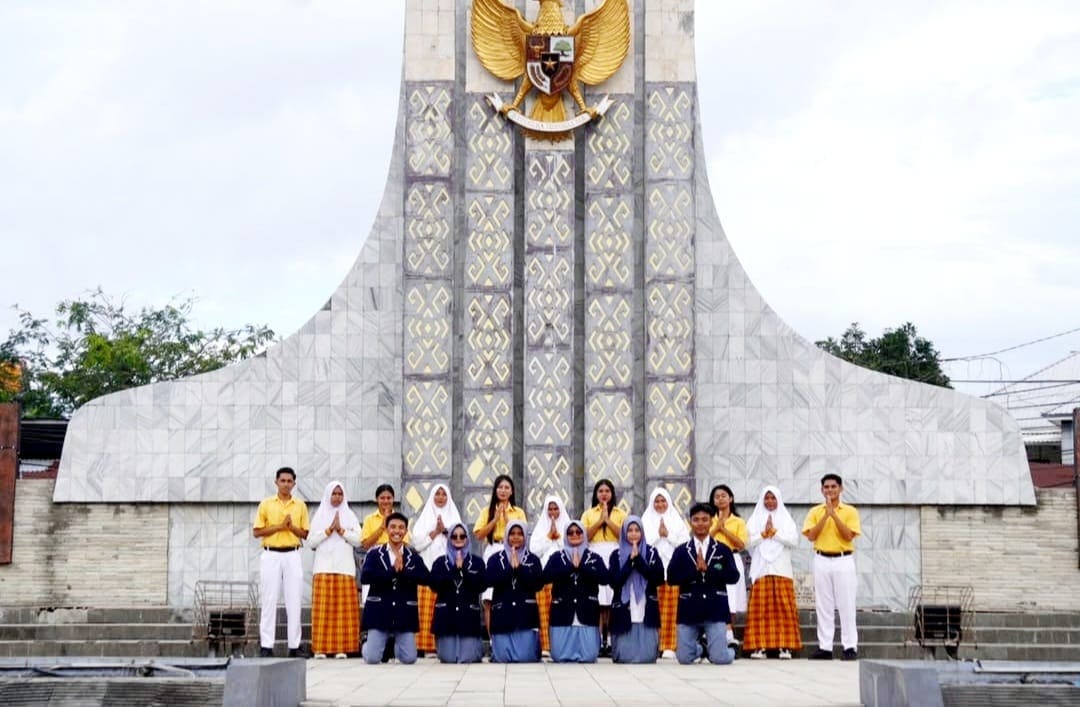
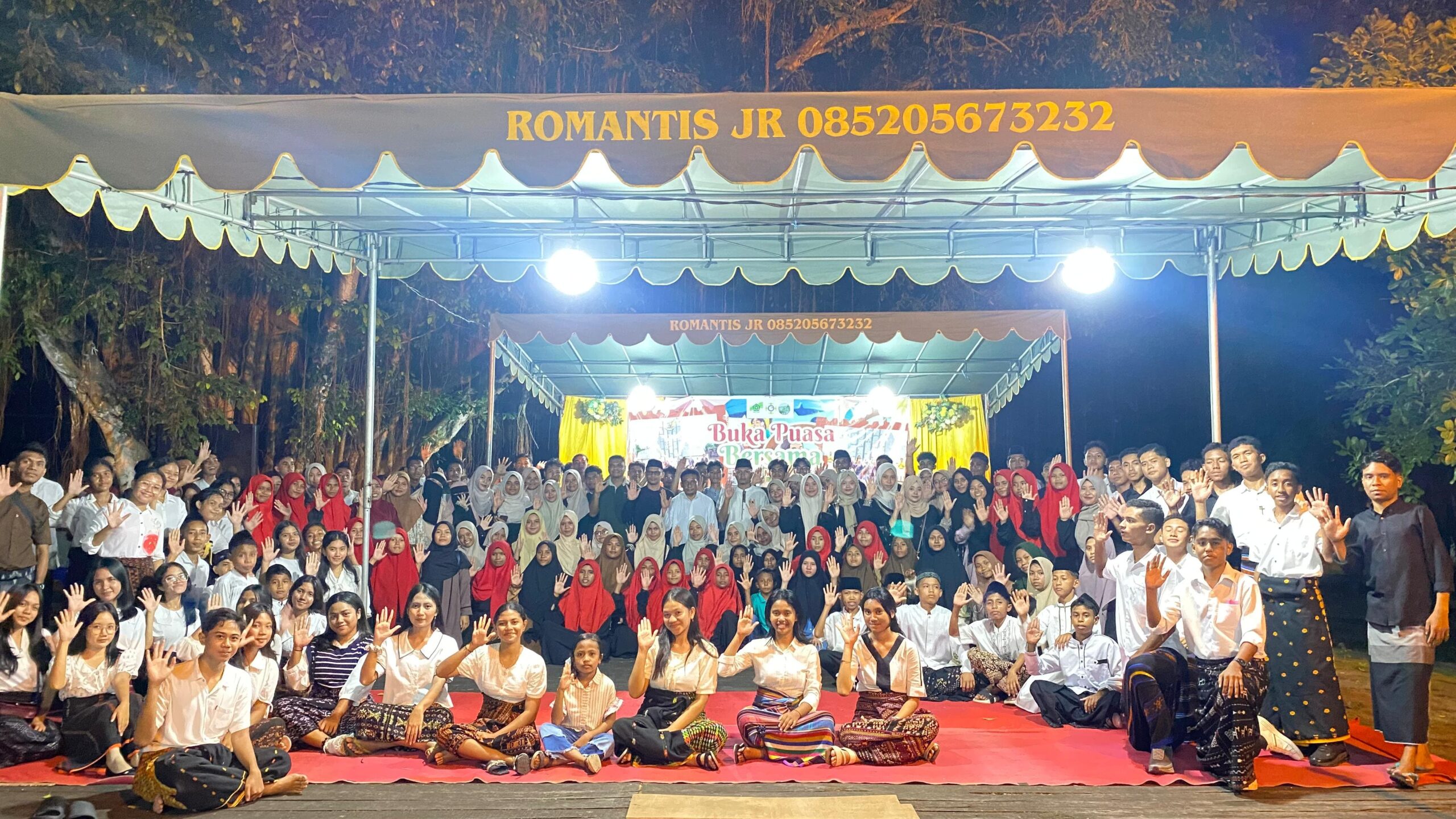
Students from different religious backgrounds gathered in a spirit of friendship and solidarity during a Ramadan 2026 Iftar event hosted by SMAK Syuradikara Ende at Bung Karno Reflection Park on March 11.
By Marianus Paulino Mada, SVD
A warm spirit of friendship and solidarity marked the Ramadan 2026 Iftar Gathering held at the Bung Karno Reflection Park in Ende on March 11, 2026. Organized by SMAK Syuradikara Ende, a Catholic school run by the Society of the Divine Word (SVD), the event brought together students from different religious traditions in a meaningful celebration of dialogue, mutual respect, and shared humanity.
The gathering was held under the theme: “Through the Ramadan 2026 Iftar Gathering, we strengthen the spirit of friendship and tolerance in the atmosphere of brotherly love among students to realize Ende Sare Pawe as the City of Pancasila.”
Students and teachers from SMAK Syuradikara Ende, Madrasah Aliyah Negeri Ende, and Pesantren Walisangaparticipated in the event, highlighting the importance of interreligious friendship among young people.
In his opening remarks, the principal of SMAK Syuradikara Ende, Kristianus Riberu, SVD, explained that the Iftar gathering is an annual initiative designed to strengthen bonds of friendship and solidarity among students.
He emphasized that breaking the fast together is more than simply sharing a meal; it is an opportunity to reflect on the deeper values of tolerance, unity, and mutual respect. The choice of Bung Karno Reflection Park as the venue also carried symbolic meaning.
The park is historically associated with Sukarno, the first president of Indonesia, who spent years in exile in Ende and reflected there on philosophical ideas that later shaped the national ideology of Pancasila.
“This place is a home of tolerance,” Br. Kristianus said, inviting students to rediscover the spirit of brotherhood in a world often marked by division, egoism, and hostility.
During his remarks, he also shared a personal childhood memory. The religious habit he wore that evening, he said, was a gift from his Muslim grandmother. As a child, he often played around a mosque in his neighborhood.
For him, these experiences show that living together in diversity has long been a natural part of everyday life and has shaped attitudes of respect and openness toward people of different faiths.
Representing Madrasah Aliyah Negeri Ende, Mrs. Ainun expressed appreciation for the invitation and the opportunity to gather in such a spirit of friendship.
She noted that Ende holds an important place in Indonesia’s history because of its connection to Sukarno and his reflections on the nation’s foundational values. Events like this, she said, help preserve those ideals by fostering friendship and mutual respect among young people of different religions.
The program continued with the recitation of verses from the Qur’an by a student from Madrasah Aliyah Negeri Ende, creating a solemn and reflective atmosphere as the time for breaking the fast approached.
A spiritual reflection (tausiah) was then delivered by Ustad Awaludin. In his message, he shared his personal story of growing up in a Catholic family while living in a peaceful and accepting environment. For him, the gathering that afternoon reflected God’s love at work in human diversity.
He explained that fasting during Ramadan is a path to deeper devotion and self-discipline. Ramadan, he said, can be understood as a “curriculum” given by God to help believers grow spiritually and become better individuals. The lessons learned during this holy month should continue to guide daily life long after Ramadan ends.
He also spoke about the significance of the final ten days of Ramadan, a period when Muslims intensify their spiritual search for God’s mercy and blessings. More broadly, he emphasized that Ramadan teaches people to live peacefully with one another and not to be easily influenced by conflicts and divisions often driven by worldly interests.
As sunset approached and the moment to break the fast arrived, participants shared food and conversations in a joyful atmosphere of friendship.
More than a ceremonial event, the gathering became a visible sign of a shared commitment to nurture and protect the spirit of brotherhood across religious differences.
In his closing remarks, Br. Kristianus expressed a simple yet profound hope: that the friendships formed that afternoon would continue beyond the event itself.
“If one day you meet again on the street,” he said, “may you not feel like strangers.”
Through this gathering, students in Ende were reminded that tolerance is not merely an abstract concept. It grows through real encounters, mutual respect, and a willingness to live peacefully together.
This spirit continues to inspire the vision of Ende Sare Pawe as the City of Pancasila, a place where unity and harmony flourish amid diversity.